
类别: DIPLOMA
Skill Level: Beginner

🌟 Welcome to Your New UniKL VLE ! 🌟 We’ve made these improvements to ensure your learning experience is engaging, flexible, and more enjoyable than ever! 🎉
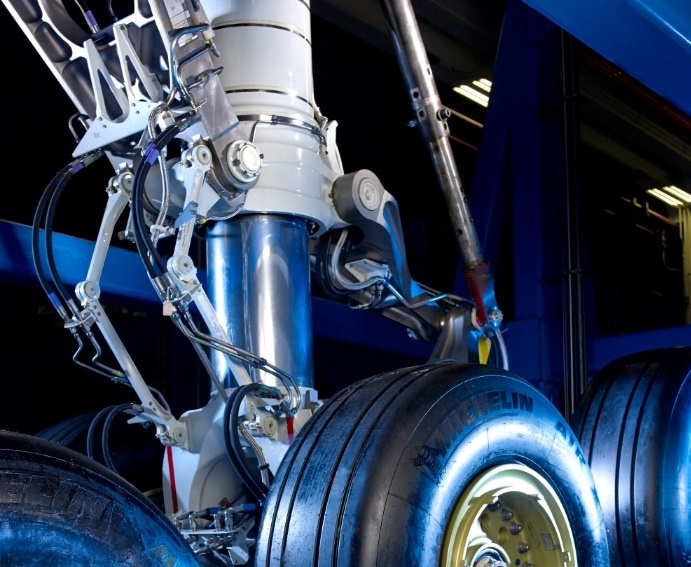 Upon the completion of this course, the students should be able to: Upon the completion of this course, the students should be able to:1. IDENTIFY and DESCRIBE the appropriate regulatory requirements relating to AIRCRAFT LANDING GEAR SYSTEM |
||
2. DESCRIBE and EXPLAIN the operations, constructions, systems layout and components of the AIRCRAFT LANDING GEAR SYSTEM using appropriate drawings or schematic diagrams. |
||
3. CARRY OUT Aircraft Landing Gear Systems components removal & installation as per AMM procedures |
||
4. CARRY OUT Aircraft Landing Gear Systems servicing as per the AMM procedures. |
||
5. PERFORM servicing of the Aircraft Landing Gear Systems and components as per the relevant technical documents. |
||
6. EFFECT the documentations and certifications for maintenance tasks carried out on an aircraft in accordance with the appropriate regulatory requirements. |
Hi All!
This is the introductory course to the aircraft landing gear systems and maintenance, such as the component of shock strut, aircraft brakes, aircraft wheel, aircraft tube and tires and anti skid brake control system.
Upon completion of this course students should be able to:
1. IDENTIFY and DESCRIBE the appropriate regulatory requirements relating to AIRCRAFT LANDING GEAR SYSTEM.2. DESCRIBE and EXPLAIN the operations, constructions, systems layout and components of the AIRCRAFT LANDING GEAR SYSTEM using appropriate drawings or schematic diagrams.
3. CARRY OUT AIRCRAFT LANDING GEAR SYSTEM components removal & installation as per AMM procedures.
4.
CARRY OUT AIRCRAFT LANDING GEAR
SYSTEMS servicing as per AMM procedures.
All the best!!!

Upon completion of this course students should be able to:
1. DESCRIBE the relationship between atmospheric conditions and human physiology needs with respect to Aircraft Air Conditioning and Pressurization Systems.
2. DESCRIBE typical constructions, systems layout and components of the Oxygen, Air Conditioning and Pressurization Systems using appropriate drawings or schematic diagrams.
3. EXPLAIN the operations of the Oxygen, Air conditioning and Pressurization Systems and their related components using appropriate drawings and schematic diagrams.
4. PERFORM inspection, servicing, analyzing findings on Aircraft Oxygen, Air Conditioning and Pressurization Systems and components as per the approved relevant technical documents.
 By the end of the course, the students shall be able to: By the end of the course, the students shall be able to:1. Identify and describe the appropriate regulatory requirements relating to Aircraft Cabin Interior System and Ice and Rain Protection System. |
||
| 2. Describe the typical examples of the constructions, systems layout and components of
the Aircraft Cabin Interior System and Ice and Rain Protection System using appropriate
drawings or schematic diagrams. |
||
| 3. Explain the operations of the Aircraft Cabin Interior System and Ice and Rain
Protection System and their related components using appropriate drawings and
schematic diagrams. |
||
| 4. Perform inspection and analyze findings on Aircraft Cabin Interior
System and Ice and Rain Protection Systems and components as per the relevant
technical documents. |
||
| 5. Carry out servicing of the Aircraft Cabin Interior System and Ice and Rain
Protection Systems and components as per the relevant technical documents. |
||
| 6. Perform the documentation and certifications for maintenance tasks carried out on an aircraft in accordance with the appropriate regulatory requirements |
1. IDENTIFY (C1) and DESCRIBE (Cl) the appropriate regulatory requirements relating to turbine engines constructions
2. EXPLAIN (C2) the constructions of the turbine engine using appropriate drawings or schematic diagrams
3. EXAMINE (C3) the operations, working principles and their related components using appropriate drawings and schematic diagrams
4. TROUBLE-SHOOT (P4), INSPECT (P1) and CARRY OUT (P4) replacements of the turbine engine components as per the relevant technical documents
5. PERFORM (P4) servicing of the turbine engine components as per the relevant technical documents.
6. PERFORM (C3) all documentations relevant to the rnaintenance tasks carried out on an aircraft in accordance with the appropriate regulatory requirements
Learning Outcomes:
Upon completion of this course students should be able to:
1. Identify and describe the appropriate regulatory requirements relating to piston engines’ systems.
2. Describe typical examples of the constructions, systems layout and components of the piston engines’ systems using appropriate drawings or schematic diagrams.
3. Describe the operations of the piston engines’ systems and their related components using appropriate drawings and schematic diagrams.
4. Perform inspections, trouble-shooting and replacements of the piston engines’ systems and components as per the relevant technical documents.
5. Perform servicing of the piston engines’ systems and components as per the relevant technical documents.
6. Effect the documentations and certifications for maintenance tasks carried out on an aircraft in accordance with the appropriate regulatory requirements.
Upon completion of this course students should be able to:
1. Identify and describe the appropriate regulatory requirements relating to turbine engines’ systems.
2. Describe typical examples of the constructions, systems layout and components of the turbine engines’ systems using appropriate drawings or schematic diagrams.
3. Describe the operations of the turbine engines’ systems and their related components using appropriate drawings and schematic diagrams.
4. Perform inspections, trouble-shooting and replacements of the turbine engines’ systems and components as per the relevant technical documents.
5. Perform servicing of the turbine engines’ systems and components as per the relevant technical documents.
6. Effect the documentations and certifications for maintenance tasks carried out on an aircraft in accordance with the appropriate regulatory requirements.
This is part two study on gas turbine
engines. As a continuation of part one, this part two describes the bearings
used in gas turbine engines, the lubrication and air sealing of the bearings,
and how the same air system cools the hot section components of the engine. The
study looks at how the fuel metering, starting, and ignition system support the
operation of gas turbine engines. To read engine power and monitor engine
operation from the flight deck, the study covers the various engine
instrumentation system
1. IDENTIFY (C1) and DESCRIBE (Cl) the appropriate regulatory requirements relating to turbine engines constructions
2. EXPLAIN (C2) the constructions of the turbine engine using appropriate drawings or schematic diagrams
3. EXAMINE (C3) the operations, working principles and their related components using appropriate drawings and schematic diagrams
4. TROUBLE-SHOOT (P4), INSPECT (P1) and CARRY OUT (P4) replacements of the turbine engine components as per the relevant technical documents
5. PERFORM (P4) servicing of the turbine engine components as per the relevant technical documents.
6. PERFORM (C3) all documentations relevant to the rnaintenance tasks carried out on an aircraft in accordance with the appropriate regulatory requirements
1. IDENTIFY (C1) and DESCRIBE (Cl) the appropriate regulatory requirements relating to turbine engines constructions
2. EXPLAIN (C2) the constructions of the turbine engine using appropriate drawings or schematic diagrams
3. EXAMINE (C3) the operations, working principles and their related components using appropriate drawings and schematic diagrams
4. TROUBLE-SHOOT (P4), INSPECT (P1) and CARRY OUT (P4) replacements of the turbine engine components as per the relevant technical documents
5. PERFORM (P4) servicing of the turbine engine components as per the relevant technical documents.
6. PERFORM (C3) all documentations relevant to the rnaintenance tasks carried out on an aircraft in accordance with the appropriate regulatory requirements
This course is designed to teach engineering drawing to the students using Computer-Aided Design (CAD) software. This course leads students to an understanding of engineering drawing. The students also will be given exposure to use CAD software for exercising their skills and knowledge to complete 2D and 3D drawings by using AutoCAD.